Esports, or electronic sports, refers to organized and competitive video gaming where players or teams compete under defined rules, formats, and tournament structures. Unlike casual gaming played for entertainment, esports is performance-driven and skill-based.
Professional esports involves training, strategy, teamwork, and participation in officially organized competitions that are broadcast to audiences across digital platforms. Over time, esports has evolved into a structured ecosystem that includes athletes, teams, event organizers, broadcasters, and governing frameworks.
Esports is recognised globally as a competitive sport due to its structured formats, high skill requirements, and regulated competitive environment. Esports athletes prepare rigorously, follow match protocols, and compete at national and international levels—similar to athletes in traditional sports.
The competitive integrity, spectator engagement, and professional ecosystem around esports clearly place it within the modern definition of sport.
Esports Is a Regulated Sport
Global Recognition of Esports
Esports has gained recognition across major international sporting and institutional platforms:
The International Olympic Committee (IOC) has formally engaged with esports through initiatives like the Virtual Olympic Series.
The Olympic Council of Asia (OCA) has included esports in its events for several years, with esports featured as a medal sport at the Asian Games 2022.
Esports has been a medal sport in the Southeast Asian Games and featured alongside the Commonwealth Games through dedicated esports championships.
India has also achieved international success, including a bronze medal at the Asian Games, highlighting the country’s competitive presence.
Globally, esports is recognized as a sport by numerous countries and institutions, reinforcing its legitimacy within the international sports ecosystem.
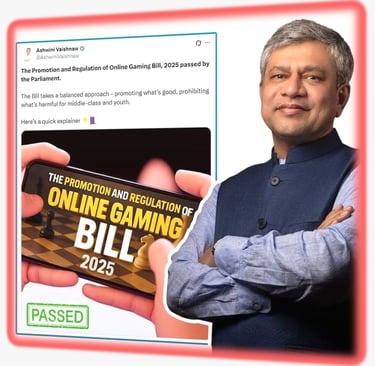
The Indian government will now support esports through tournament, training centers and special rules.
The Ministry of Youth Affairs and Sports will prepare guidelines and standards for tournaments. Training academies, research centers and technology platforms will be set up to advance the sector. Incentive schemes and awareness programs will also be launched to integrate e-sports into broader sports policies.